La Roque d’Anthéron Festival

La Roque d’Anthéron Festival

Melodic Splendor: Discovering the Charms of La Roque d’Anthéron Festival

Top Classical, July 2023
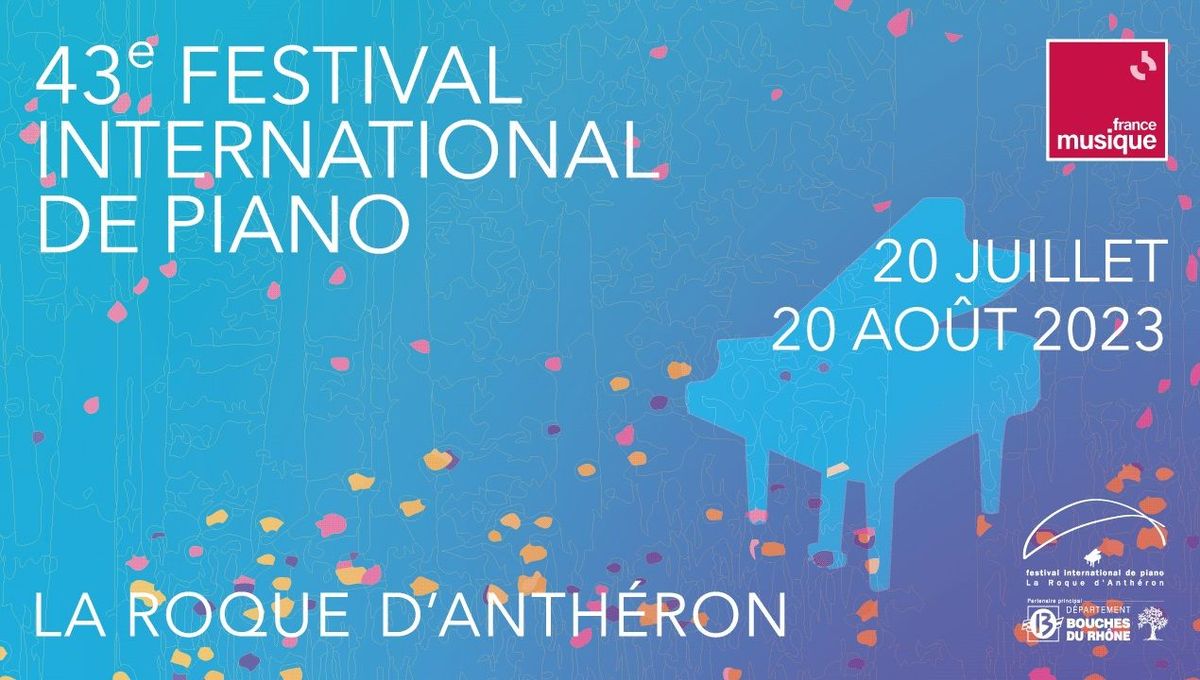
Nestled in the charming commune of La Roque, the picturesque La Roque d’Anthéron Festival emerges as a mesmerizing celebration of music, culture, and art. It all started back in 1971 when Paul Onoratini, the mayor of La Roque at the time, teamed up with his son, Bernard, an interior architect with an ardent passion for the piano, to launch the “Musique à Silvacane” project. This initial venture featured a series of seven concerts held at Silvacane Abbey each year—a promising beginning to what would become a much grander musical affair.

Intriguingly, the festival’s roots intertwine with the story of a fateful meeting between Paul Onoratini and René Martin, who dreamt of creating a piano festival in the Aix region. A stroke of fate brought them together, and when Paul Onoratini discovered the magnificent Parc de Florans, he was filled with enthusiasm for the vision. Thus, the first La Roque d’Anthéron Festival was born in 1981, on a single stage in the Parc du Château de Florans.
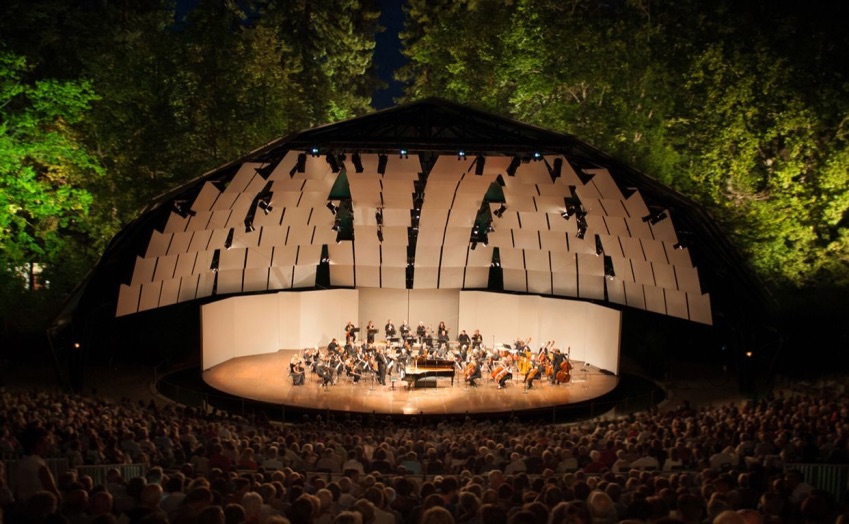
The debut festival boasted twelve concerts, attracting a remarkable 9000 spectators, eager to witness performances by renowned artists like Youri Egorov, Vlado Perlemuter, Martha Argerich, and Krystian Zimermann. The event’s early success set the stage for future greatness.

Since that milestone event, the festival has flourished, inviting over 700 pianists, featuring a staggering 2509 concerts, and recording an impressive two million tickets sold. René Martin, the artistic mastermind behind the festival, has also contributed his magic touch to numerous other musical endeavors, including the Festival de la Grange de Meslay, the Abbaye Royale de Fontevraud, and the Moments Musicaux de l’Hermitage-Barrière in La Baule. And let’s not forget his role in creating La Folle Journée in Nantes, Tokyo, Bilbao, Rio, and Warsaw—truly a force to be reckoned with in the music world.

What makes La Roque d’Anthéron Festival stand out is the harmonious collaboration between the Artistic Direction and the Presidency, fostering an environment of simplicity and quality. Both artists and audiences are welcomed with genuine warmth, and the dedication of numerous devoted volunteers is the lifeblood of the festival.

Now, let’s dive into the magic of the upcoming 43rd edition, filled with breathtaking performances and delightful surprises. This year’s highlights include the “Intégrale des concertos pour piano de Beethoven,” presented across four evenings at various locations. Featuring the likes of Bertrand Chamayou, Anne Queffélec, and François-Frédéric Guy, this Beethoven feast is not to be missed.

Venturing into the world of Chopin, the festival presents a captivating evening titled “Chopin, ou Le Temps retrouvé,” with Jean-Marc Luisada at the Théâtre des Terrasses in Gordes. Another promising talent, Bruce Liu, winner of the Chopin Competition in Warsaw, will grace the stage with Rossini and Chopin masterpieces.

The festival also pays tribute to the great Rachmaninov, featuring pianists like Anna Geniushene and Nikolaï Lugansky. And let’s not forget the exciting carte blanche given to Alexandre Kantorow, performing works by Beethoven and Schubert alongside talented artists like Liya Petrova and Aurélien Pascal.

For those eager for fresh musical experiences, the festival will feature diverse genres, including Baroque, jazz, and even electronic music, adding a thrilling new dimension to the event.

As the festival pays homage to remarkable composers like Henri Dutilleux, Julian Anderson, and Philippe Schoeller, it invites audiences to immerse themselves in a world of imagination, color, and originality.

With Alexandre Tharaud’s captivating performance and a vibrant program featuring Rameau, Grieg, and Beethoven, the La Roque d’Anthéron Festival promises an enchanting and unforgettable journey into the realm of music and art. Embrace the magic, explore the melodies, and revel in the musical wonders that await at La Roque d’Anthéron.
What Remains

What Remains

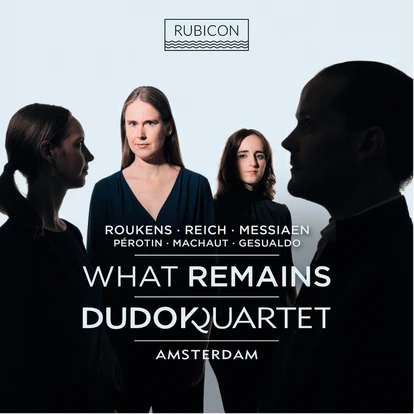
Echoes Through Eternity: ‘What Remains’

July 2023
Dudok Quartet Amsterdam delivers an enchanting auditory exploration with their latest release, “What Remains.” A symphony of diverse compositions, ranging from centuries past to the contemporary, this album takes listeners on an immersive journey through time and sound. While occasionally missing a visual element, the quartet’s impassioned performance leaves an indelible mark, particularly in the title work by Joey Roukens.

The eponymous centerpiece of the album, Roukens’s “String Quartet No. 4 ‘What Remains,'” is a musical odyssey that delves into the realms of memory, form, and music itself. The quartet’s rendition resonates with fervor and connection, inviting audiences to embark on an introspective expedition. Roukens’s quartet is a captivating tapestry, woven with intricate threads of emotion that unravel with each subsequent listen, revealing the depths of its artistic brilliance.

“What Remains” embraces a sweeping range of compositions, from the early notations of Pérotin’s “Viderunt omnes” to the enigmatic madrigal by Gesualdo. These historical pieces act as pillars, framing the hauntingly powerful performances of Olivier Messiaen’s celestial “Oraison” from “Fête des belles eaux” and Steve Reich’s immersive “Different Trains.” The album’s thematic focus on time, motion, and journeys is poetically expressed through this eclectic selection, offering a sonorous glimpse into the continuum of human experience.

A standout gem, Steve Reich’s “Different Trains,” unfurls as a cinematic masterpiece, intertwining a World War II narrative with magnetic tape effects and evocative voiceovers. The quartet’s rendition captures the essence of the composition’s emotional depth, though at times, the recorded sound’s constraints prevent the full realization of its grandeur, imparting a peculiar dryness and confinement.

While the conceptual through-lines of time and motion occasionally meld less seamlessly across the album’s eclectic array, Dudok Quartet Amsterdam’s impassioned and intense performance bridges these realms. The quartet’s dedication to Roukens’s opus and the wider repertoire is palpable, drawing listeners into an enchanting auditory world that ignites the imagination.

In summation, “What Remains” is a meticulously curated mosaic of sound that beckons listeners to contemplate the elusive passage of time and the spectral echoes of history. Despite minor limitations in capturing the full auditory spectrum, the Dudok Quartet Amsterdam’s masterful interpretations, particularly of Joey Roukens’s resonant quartet, make this album an enriching and immersive journey for aficionados of classical and contemporary soundscapes alike.

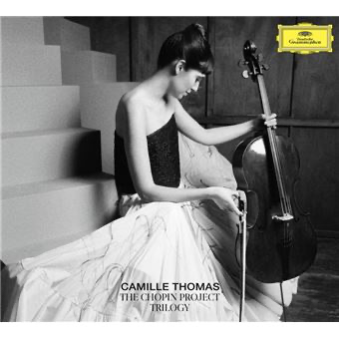
The Chopin Project Trilogy

The Chopin Project Trilogy

An Unconventional Ode to Chopin: The Chopin Project by Camille Thomas

July 2023
In the realm of classical music, innovation and reinterpretation often breathe new life into beloved compositions, and “The Chopin Project” by cellist Camille Thomas stands as a showcase of this creative spirit. Thomas takes on the monumental task of transcribing Chopin’s quintessentially pianistic works for the cello, producing a triple album that offers a unique perspective on the masterful composer’s creations.

At first glance, the idea of translating Chopin’s intricate piano compositions to the cello might raise eyebrows, but historical precedent reveals that such a fusion would not have been out of place during the 19th century. Augmented by the contributions of Chopin’s friend, cellist Auguste Franchomme, these transcriptions bridge the gap between two instrumental worlds, yielding a fresh sonic landscape that invites both scrutiny and admiration.

Divided into three distinct sections, the album traces the evolution of this daring project. The initial CD boasts arrangements for cello and piano, not only by Franchomme but also by Thomas herself and other skilled musicians. Thomas’s performance is imbued with a profound understanding of Chopin’s lyricism, yet her execution remains controlled, fitting seamlessly into a chamber music context. An unexpected gem on this disc is a rendition of Jane Birkin and Serge Gainsbourg’s “Jane B.,” interwoven with Chopin’s Prelude in E minor, Op. 28, No. 4, demonstrating the eclectic scope of Thomas’s vision.

The second segment delves into Chopin’s complete chamber music, some of which receives Franchomme’s transformative touch. This exploration provides a rich opportunity to appreciate Chopin’s compositions through a different lens, revealing intricate details that might be overshadowed on the piano.

The third and final CD showcases Chopin’s works reimagined for multiple cellos, courtesy of Franchomme’s innovative arrangements. Furthermore, Emanuel Schmidt’s cello and string quartet version of the Cello Sonata, Op. 65, adds an extra layer of depth to the project. Notably, Franchomme’s own compositions, included in this section, once masqueraded as authentic Chopin pieces, a testament to his mastery and the era’s blurred lines between composers.

Camille Thomas, the driving force behind this endeavor, emerges as an inspired cellist. Her dedication to uncovering the Chopin-Franchomme connection is evident in her meticulous research and heartfelt performances. While experiencing the entirety of “The Chopin Project” in one sitting might be a formidable task, the album offers an invaluable contribution to the Chopin discography. This release caters to both ardent Chopin enthusiasts and those seeking a novel perspective on classical music history.

“The Chopin Project” by Camille Thomas is a bold and imaginative exploration of Chopin’s compositions through the lens of the cello. Thomas’s artistry and dedication shine through, offering a multifaceted listening experience that challenges preconceptions and enriches the world of classical music. This album is a worthy addition to any serious Chopin lover’s collection and a demonstration of the enduring spirit of musical innovation.

Beethoven and Beyond

Beethoven and Beyond

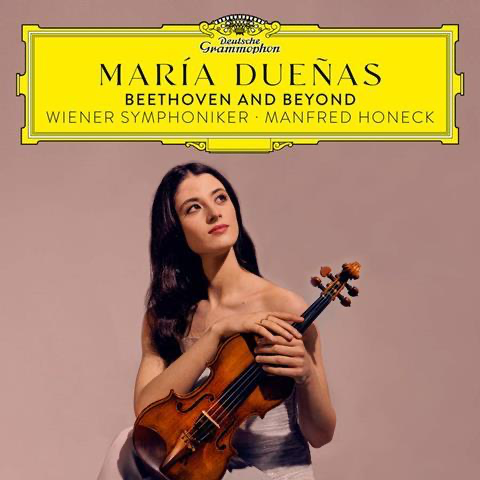
Maria Dueñas – “Beethoven and Beyond”

July 2023
Maria Dueñas, at just 20 years old, makes a striking DG debut with “Beethoven and Beyond,” showcasing her gleaming and heavily vibrato-laden tone, along with a proudly legato delivery and phrasing filled with captivating little emphases. The highlight of the album is her highly individual and memorable rendition of Beethoven’s Violin Concerto, recorded live over three Vienna Musikverein performances.

Dueñas’ interpretation of the Beethoven Violin Concerto is undeniably Romantic in every sense, but it’s cleverly balanced by the slightly crisper and noble-flavored orchestral support provided by her mentor, Manfred Honeck. Honeck’s guidance keeps a tight hold on the momentum of the first movement, skillfully navigating through marked slowings for the super-hushed minor-key episodes and coda re-entry. Particularly noteworthy is how Honeck allows the bassoonist to shine through the orchestral texture, adding an extra layer of brilliance to the performance. While this rendition may not suit those seeking a more brisk and energetic approach, its finely balanced nature will enchant listeners with its emotional depth.

Adding a unique touch to the concerto, Dueñas showcases her talent as a composer by providing three brand new self-penned cadenzas. These bold and languorously romantic creations add a fresh perspective to the familiar piece, with the finale’s cadenza being the most striking of the trio. Dueñas’ creativity and artistic expression shine through these compositions, demonstrating her prowess not only as a performer but also as a gifted composer.

The album continues with a selection of short works by composers who also wrote first-movement cadenzas for Beethoven’s concerto. These pieces play brilliantly to Dueñas’ warm-blooded virtuosity, further highlighting her exceptional skill on the violin. However, it is worth mentioning that a missed opportunity occurs by not programming each work alongside its respective composer’s Beethoven cadenza. This could have offered a unique variation and provided insights into how these composers translated their musical languages into Beethoven’s concerto. Nonetheless, the album’s overall impact remains powerful and captivating.

Maria Dueñas’ “Beethoven and Beyond” is an impressive debut album, where her remarkable talent and artistry shine brightly. Her interpretation of Beethoven’s Violin Concerto is highly individual and emotionally charged, enriched by the excellent orchestral support from Manfred Honeck. The addition of her self-composed cadenzas adds a personal touch to the iconic concerto, showcasing her versatility as a musician. While the missed opportunity in programming the short works alongside their respective cadenzas is notable, the album still packs a punch and leaves a lasting impression. Maria Dueñas undoubtedly has a promising future ahead as both a performer and composer in the classical music world.

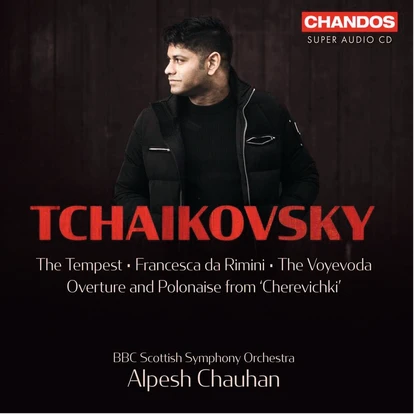
Tchaikosvky by Alpesh Chauhan

Tchaikosvky by Alpesh Chauhan

Tchaikovsky’s Evocative Symphony: A Theatrical Exploration

July 2023
Alpesh Chauhan and the BBC Scottish Symphony Orchestra embark on an insightful voyage into the realm of Tchaikovsky’s compositions in their latest release. Featuring “The Voyevoda,” “The Tempest,” “Francesca da Rimini,” and excerpts from “Cherevichki,” this album unveils Chauhan’s profound understanding of Tchaikovsky’s musical language while showcasing the orchestra’s exquisite responsiveness.

“The Voyevoda,” a work overlooked by the composer himself, comes alive under Chauhan’s skilled direction. The performance opens with a brisk tempo, immediately capturing the listener’s attention. Chauhan deftly navigates the shifts between haunting bass clarinet passages and impassioned love themes, leading to a chilling conclusion punctuated by gunshot-like sounds. The BBC Scottish Symphony Orchestra responds with remarkable sensitivity, vividly illustrating the dramatic narrative.

Chauhan’s interpretation of “The Tempest” continues this exploration of dramatic intensity, immersing the listener in a vivid sonic representation of the Shakespearean tale. The quasi-impressionistic opening establishes a captivating mood, gradually building into a tempestuous storm, with the orchestra portraying both the fury and fleeting moments of calm. The orchestra’s delicate strings create an atmosphere of enchantment, artfully phrasing the emerging love theme amid the turmoil.

The excerpts from “Cherevichki” demonstrate Tchaikovsky’s inventive spirit, convincingly presented by Chauhan and the orchestra. The performance captures the opera’s charm and wit, showcasing Chauhan’s ability to breathe life into lesser-known pieces and infusing them with vibrancy.

The pinnacle of the album arrives with a compelling rendition of “Francesca da Rimini.” Chauhan guides the orchestra through passages of fervent energy, mirroring the blossoming and tragic love affair between Paolo and Francesca. The orchestra’s performance is particularly commendable during the climax of the middle section, where the emotional intensity is palpable. While the opening Wagnerian chords might lack some gravitas, this minor concern does little to diminish the overall impact of the interpretation.

Throughout the album, Alpesh Chauhan’s deep connection with Tchaikovsky’s works shines through, skillfully leading the BBC Scottish Symphony Orchestra through intricate passages and sweeping emotional landscapes. The orchestra’s responsiveness is remarkable, breathing life into each note and capturing the essence of Tchaikovsky’s intricate orchestrations.

In summation, this CD highlights Chauhan’s impressive grasp of Tchaikovsky’s musical language and the orchestra’s impeccable playing. Whether you are a seasoned admirer of Tchaikovsky’s compositions or a newcomer eager to explore the depths of Romanticism, this album is a must-listen. It offers an immersive exploration of Tchaikovsky’s evocative symphonic world, illuminated by Alpesh Chauhan and the BBC Scottish Symphony Orchestra’s artistry.

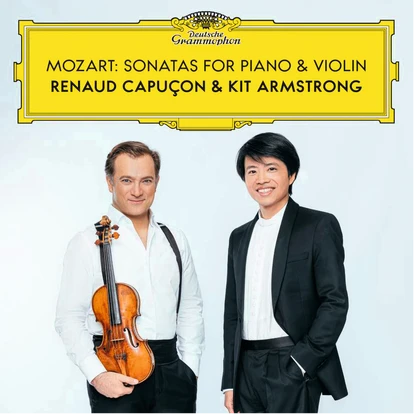
Mozart Sonatas for Piano & Violin

Mozart Sonatas for Piano & Violin

Enthralling Explorations of Mozart’s Mature Violin Sonatas

July 2023

July 2023
Renaud Capuçon (violin) and Kit Armstrong (piano) present an enthralling journey into the world of Mozart’s mature violin sonatas in their latest release, “Mozart: Sonatas for Piano and Violin.” This Deutsche Grammophon offering showcases Violin Sonatas Nos 17-28, 32-33, and 35-36, alongside delightful variations that bring out the duo’s mastery of their respective instruments.

Capuçon’s discerning choice to exclude Mozart’s earlier violin sonatas, written during his childhood, allows for a focused exploration of the composer’s more mature works. The decision emphasizes the substantial development of the violin and piano as equal partners in this period, underpinning the evolution of the medium itself.

A highlight of the album is the enchanting interplay between the two instruments, effectively shifting between foreground and background roles. Mozart’s ingenuity unfolds as the performers navigate seamless transitions, exemplified by the C major Sonata K303. Here, the dialogue between slow and fast passages in both movements demonstrates Mozart’s creativity at its peak.

The album features two sets of variations, presenting lighter musical material that balances the weightier sonatas. Capuçon and Armstrong’s skillful execution imbues these variations with a sense of playfulness and charm, inviting listeners into Mozart’s musical playground.

The treasures of this collection, however, lie in the later sonatas. The B flat Sonata K454 shines as a masterpiece, with its exceptionally beautiful Andante second movement. Historically significant, it was composed for an Italian violin virtuoso, and Mozart’s improvisational prowess is palpable in Armstrong’s sensitive piano part.

The A major Sonata K526, with its technical demands and grand scale, further showcases the duo’s profound artistry. Capuçon’s violin artfully converses with Armstrong’s modern Bechstein piano, creating a rich tapestry of sound that encapsulates the essence of Mozart’s mature compositions.

Throughout the album, Capuçon’s violin tone exudes a controlled brilliance, hinting at his vast resources while maintaining a sense of restraint. This dynamic partnership between the violinist’s finesse and Armstrong’s poised piano performance results in interpretations that capture the music’s inherent freshness and spirit.

 Renaud Capuçon and Kit Armstrong’s  insightful interpretations bring to life the composer’s intricate dialogues between violin and piano, shedding light on the genre’s evolution. This album is a must-listen for both aficionados of Mozart and enthusiasts of chamber music alike.

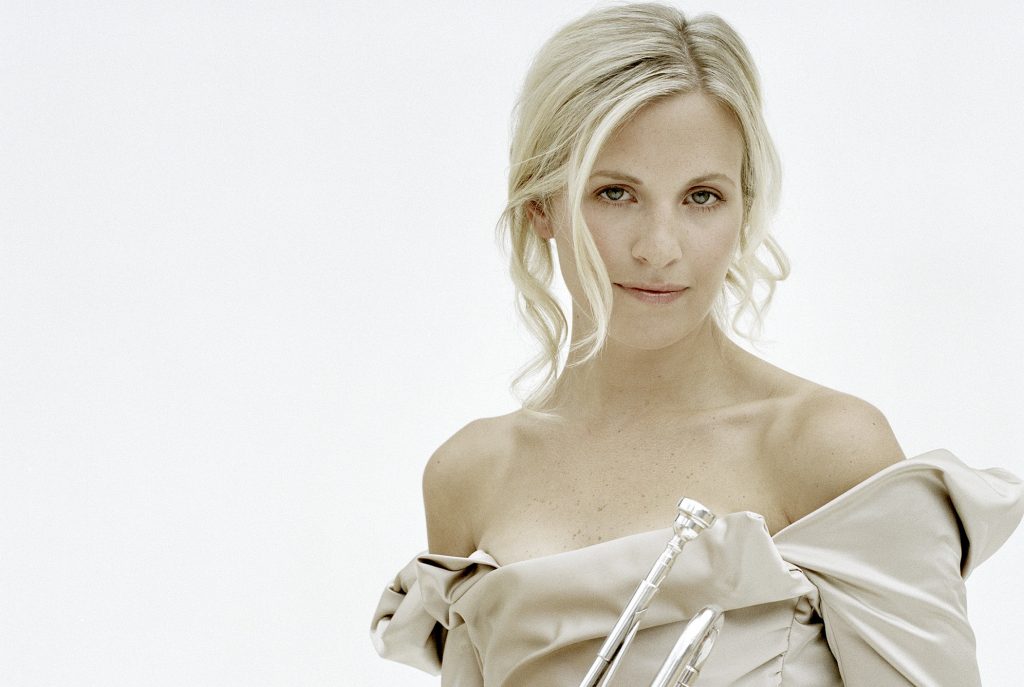
Alison Balsom

Alison Balsom

Top Classical, July 2023
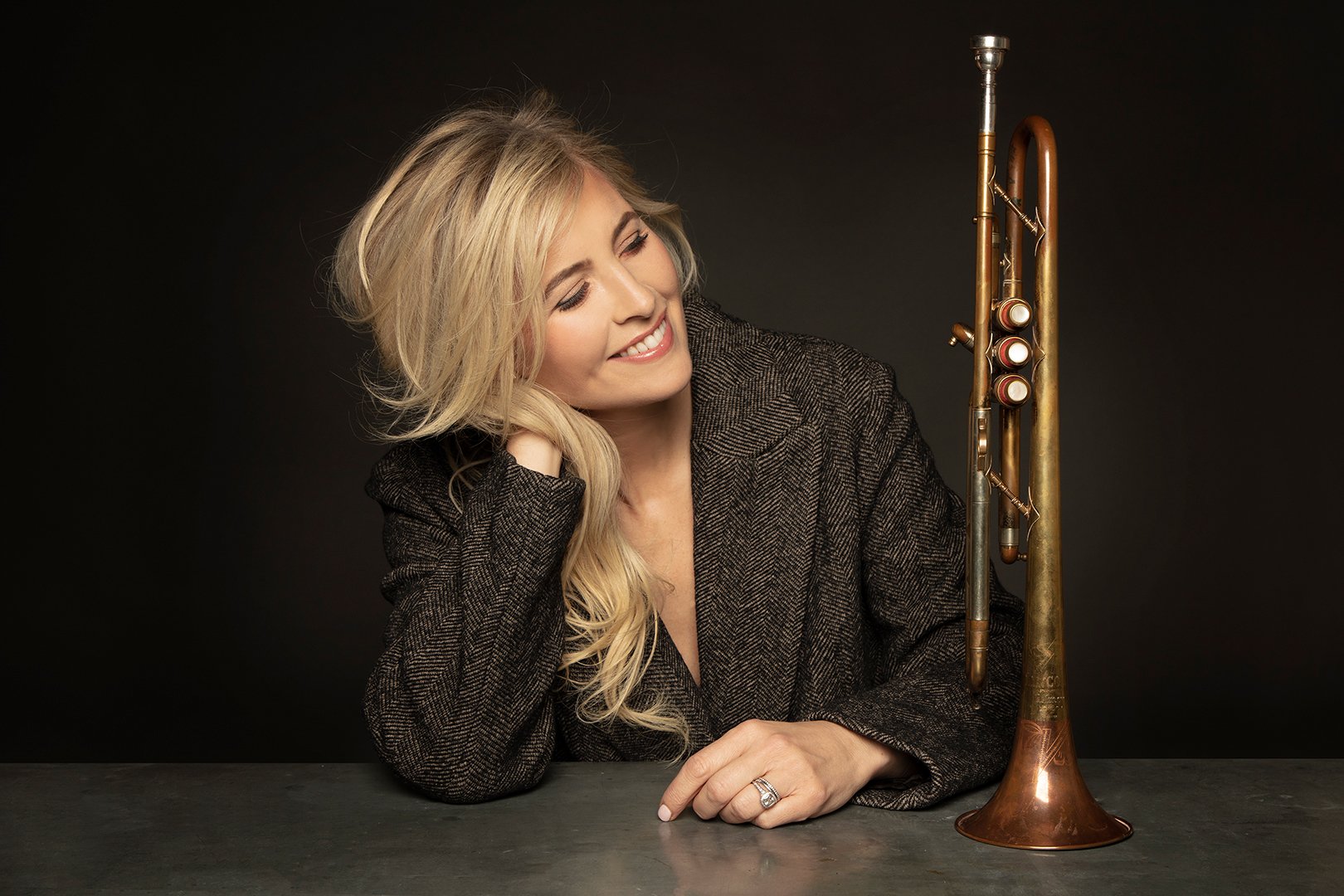
Alison Balsom, a name synonymous with the trumpet’s enchanting melodies, stands as one of the finest trumpet soloists of her generation. Her musical philosophy, characterized by an unwavering forward-looking approach, has not only redefined trumpet playing but has also echoed her distinctive personality through her instrument. With a career marked by accolades, innovation, and a passion for music education, Balsom has left an indelible mark on the world of classical music.

From an early age, Balsom exhibited an innate connection with the trumpet. She honed her skills on a trumpet belonging to her uncle, paving the way for her journey into the realm of music. Her prodigious talents were recognized as she found herself performing with prestigious ensembles such as the National Youth Orchestra and the Gustav Mahler Youth Orchestra, a testament to her extraordinary skill and dedication.

Balsom’s ascent to musical prominence became evident during her time at the Guildhall School of Music. Notably, she became the first brass player to be welcomed into the Young Concert Artists’ Trust, a distinction that reflected her exceptional talent and promise. Additionally, her inclusion in the BBC’s New Generation Artists scheme provided her with the opportunity to collaborate with orchestras across the United Kingdom, further cementing her reputation as a rising star.

The year 1998 marked another milestone in Balsom’s career as she reached the concerto final of the BBC Young Musician of the Year competition. Her triumphs continued as she secured the “Most Beautiful Sound” prize at the Maurice André International Trumpet Competition in Paris in 2000, a testament to her ability to evoke profound emotions through her instrument.

Balsom’s discography is a testament to her versatility and artistic prowess. Her debut album, released in 2002, signaled the beginning of a series of internationally acclaimed recordings. Notably, her album “Bach: Trumpet and Organ,” released in 2005, garnered widespread acclaim for its masterful interpretations. “Caprice,” her 2006 release, further solidified her status as a celebrated artist, capturing the hearts of listeners and critics alike.

Balsom’s global footprint expanded with captivating performances on prestigious stages. Her New York debut in 2007 marked a pivotal moment in her career, followed by memorable appearances at events such as Chicago’s Ravinia Festival, the Prague Spring Festival, and performances at Manchester’s Bridgewater Hall. Her influence in the realm of trumpet performance was underscored when she was appointed Visiting Professor of Trumpet at the Guildhall School of Music, a role that showcased her commitment to nurturing the talents of the next generation.

Beyond her exceptional artistry, Balsom’s dedication to music education is evident. Recalling her own musical journey, she emphasizes the transformative power of music in education and life. Her advocacy for music’s pivotal role in education aligns with her belief that it opens doors to creativity, self-expression, and cognitive development. Balsom’s commitment to preserving music education amidst evolving educational landscapes highlights her foresight and dedication to shaping a brighter future for aspiring musicians.

Alison Balsom’s extraordinary journey from a young trumpet enthusiast to a revered soloist exemplifies the fusion of talent, perseverance, and passion. Her ability to encapsulate her personality within her performances, drawing inspiration from musical legends like Dizzy Gillespie, sets her apart as a true trailblazer in the world of music. As her performances continue to resonate with audiences worldwide and her influence extends through her advocacy, Alison Balsom remains an inspiration to both budding musicians and aficionados of the art form.

The Munich Opera Festival

The Munich Opera Festival

Where Tradition and Innovation Converge in Harmony

Top Classical, June 2023
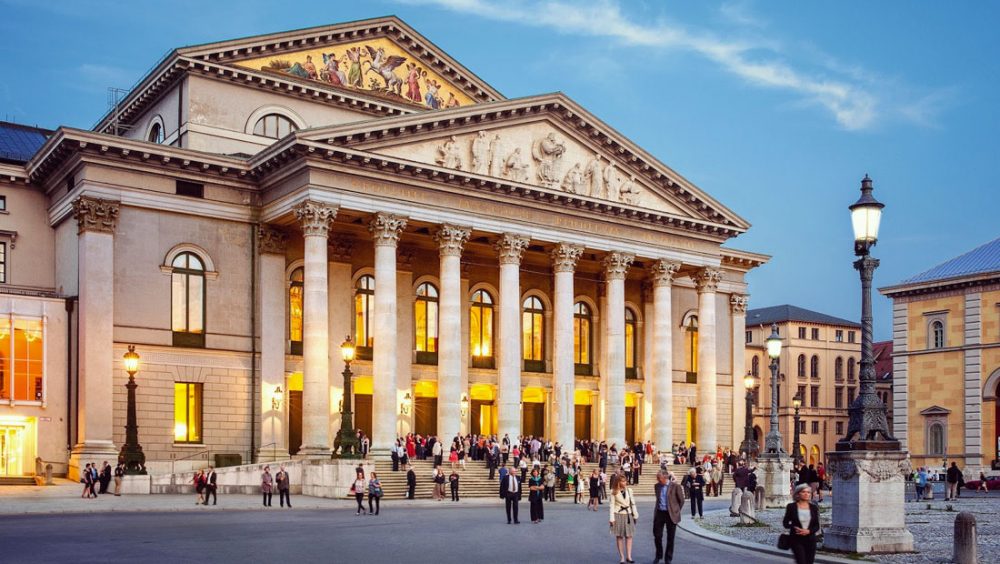
Nestled in the heart of Bavaria, Munich stands as a city steeped in history, culture, and artistic expression. Amidst its vibrant calendar of events, the Munich Opera Festival emerges as a pinnacle of musical brilliance, drawing enthusiasts from around the world to its captivating embrace. A testament to the enduring power of opera and symphonic music, the festival seamlessly weaves tradition and innovation into a tapestry of artistic grandeur.

With roots dating back to 1875, the Munich Opera Festival boasts a rich heritage that resonates with the present. This cherished tradition, meticulously nurtured under the guidance of director Serge Dorny, pays homage to the city’s deep-seated love for the operatic arts. As the festival unfolds, it offers a glimpse into the future while honoring the past—a delicate balance that sets the stage for an unforgettable experience.

The Munich Opera Festival 2023 is defined by a guiding principle: “A fountain that looks into the sky.” This thematic underpinning serves as a poetic reflection of the festival’s aspiration to uplift spirits and inspire introspection. The productions of the season’s new works resonate with this ethos, allowing audiences to embark on a profound journey of emotions and introspection through the power of music and storytelling.

As the festival unfolds, it presents a harmonious blend of contemporary innovation and timeless classics. This year’s lineup includes two highly anticipated opera premieres: György Ligeti’s “Le Grand Macabre” and Claude Debussy’s “Pelléas et Mélisande.” These works, vastly different in style yet equally captivating, showcase the diversity and boundless creativity of the operatic landscape.

The Munich Opera Festival 2023 shines a spotlight on the masterful compositions of Giacomo Puccini and Richard Wagner. These two titans of opera take center stage, with the festival featuring four of their iconic works: Richard Wagner’s transcendent “Tannhäuser” and the spiritual journey of “Parsifal,” along with Giacomo Puccini’s gripping “Tosca” and the evocative “La fanciulla del West.” These operas, imbued with depth and emotion, offer a unique opportunity to explore the gamut of human experience.

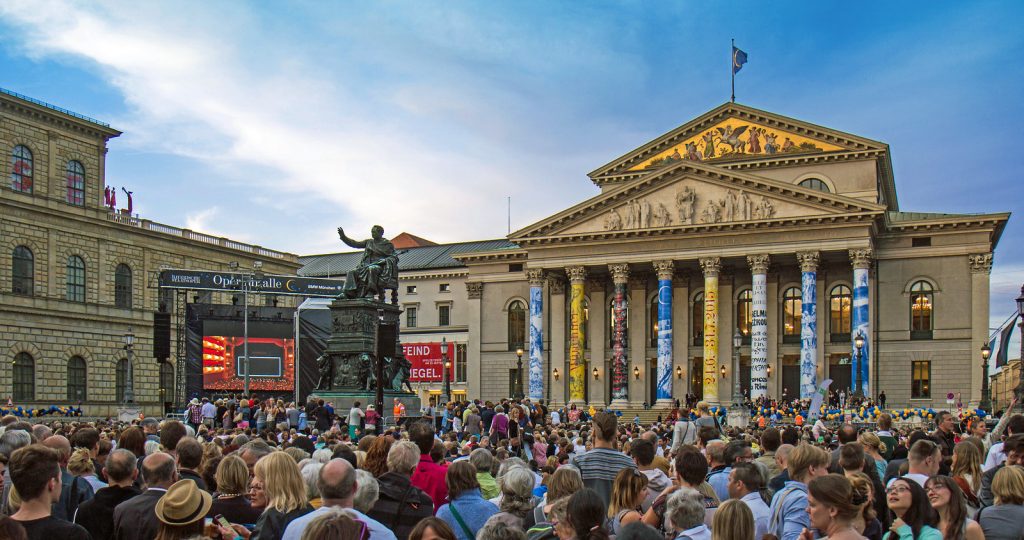
For over two decades, the Munich Opera Festival has exemplified the spirit of inclusivity through its cherished initiative, “Opera for All.” Against the picturesque backdrop of Max-Joseph-Platz, opera aficionados and newcomers alike gather to revel in free live broadcasts of performances. This heartwarming tradition epitomizes the festival’s commitment to making opera accessible to all, fostering a sense of unity and shared passion.

Beyond the operatic stage, the Munich Opera Festival 2023 enriches its program with an array of chamber concerts and ballet performances. These chamber concerts provide an intimate setting for audiences to connect with the music on a personal level, while the ballet offerings expand the horizons of artistic expression. The premiere of “Spheres.02 | Preljocaj” introduces contemporary ballets choreographed by both established figures and emerging talents, a testament to the festival’s dedication to innovation.

As the Munich Opera Festival 2023 takes flight, it encapsulates the essence of Munich itself—a city that cherishes its rich history while embracing the potential of the future. The festival’s symphonic melodies and operatic narratives resonate within historic theaters, reminding us of the enduring power of the arts to transcend time and connect humanity across generations. In a world where constant change is the norm, the Munich Opera Festival remains a steadfast beacon of cultural heritage, artistic innovation, and the timeless magic of music.

Pandolfi Mealli’s Violin Sonatas Op. 3 & 4

Pandolfi Mealli’s Violin Sonatas Op. 3 & 4

Discovering the Enigma of PANDOLFI MEALLI’s Violin Sonatas

June 2023
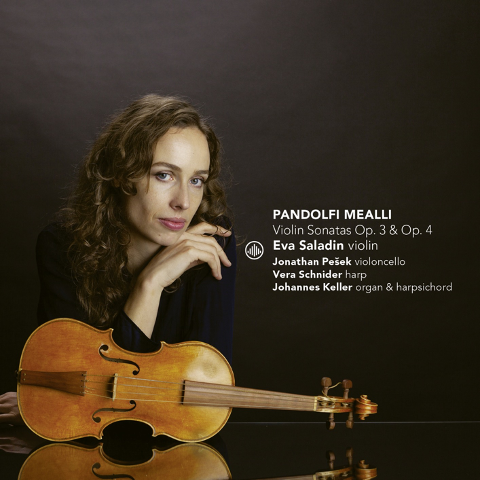
Eva Saladin’s sophomore solo album is a wonderful exploration into the depths of the 17th-century violin world, shedding light on the enigmatic genius of Giovanni Antonio Pandolfi Mealli. A virtuosic violinist in her own right, Saladin embarks on a journey that unfolds the mysteries of Pandolfi Mealli’s Violin Sonatas Opp 3 & 4, weaving a delicate tapestry of sound that resonates with elegance and emotion.

Within this auditory reverie, Saladin displays impeccable technical finesse. Her bow dances effortlessly across the strings, each note executed with precision and grace. The ensemble’s cohesion is a testament to Saladin’s prowess, as the harmonious interplay between violin and continuo creates a seamless sonic experience. While some may seek bombast, Saladin’s measured approach allows the intricate nuances of Pandolfi Mealli’s compositions to shine through.

A highlight of this album is Saladin’s ability to capture the essence of each sonata. She masterfully navigates the intricate ornamentations and captivating Lombardic passages, immersing the listener in a world of musical intricacies. The subtlety of her interpretation serves as a reminder that sometimes, less is more—a sentiment that allows Pandolfi Mealli’s ingenious craftsmanship to take center stage.

Comparisons to other interpretations become irrelevant when Saladin’s unique vision unfolds. Her rendition of La Vinciolina, Op 4 No 6, while distinct from others, is no less enthralling. The intimacy of her performance draws the listener in, inviting them to explore the labyrinthine corridors of the composer’s mind. Through Saladin’s expert touch, the second section blossoms with a sweetness that lingers long after the final note.

Saladin’s choice to open with La Cesta, Op 3 No 2, displays her insight into the narrative arc of the album. Each note resonates with purpose, as if revealing the layers of a complex story. The interplay between violin and continuo creates a sense of dialogue, a conversation that unfolds with both subtlety and fervor. Johannes Keller’s organ adds a layer of mystique, enhancing the sonic palette with its rich timbre. In the grand tapestry of Baroque violin, Eva Saladin’s interpretation is a thread of captivating allure. Her journey through Pandolfi Mealli’s works unearths a sense of wonder and discovery, inviting the listener to partake in the unveiling of musical secrets. While some may seek more flamboyant renderings, Saladin’s understated elegance paints a portrait of enchantment that lingers in the mind, beckoning listeners to explore the depths of PANDOLFI MEALLI Violin Sonatas Opp 3 & 4 again and again

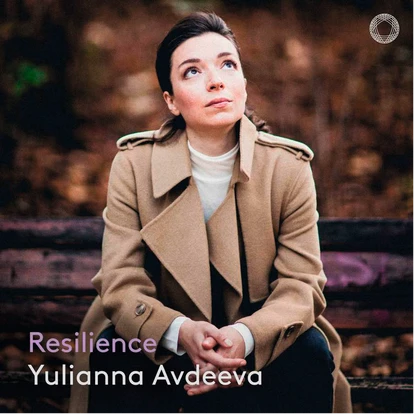
Resilience

Resilience

Resilience – Yulianna Avdeeva Triumphs with Courage and Musical Mastery

June 2023
Yulianna Avdeeva, the remarkable Russian pianist whose indomitable spirit has captivated audiences, unveils her latest musical journey, “Resilience,” in a breathtaking album released under the Pentatone label. Avdeeva’s prowess at the piano is showcased through an exquisite selection of works by Prokofiev, Shostakovich, Szpilman, and Weinberg, each composition reflecting her profound connection to the musical heritage of Eastern Europe.

Avdeeva’s resolute stance on current events, particularly her outspoken views on the war in Ukraine, adds a layer of poignant significance to her performance. As the winner of the prestigious Chopin Competition in 2010, Avdeeva’s affinity for Polish music is palpable, and it resonates throughout this remarkable collection.

The album commences with Władysław Szpilman’s hauntingly nostalgic 1942 Mazurka, a delicate and touching tribute to a bygone era. Avdeeva’s delicate touch and nuanced phrasing infuse the piece with emotion, capturing the essence of Szpilman’s reminiscences. The more avant-garde elements of Szpilman’s compositional language are boldly explored in his “Life of the Machines” suite from 1933. Avdeeva navigates through the intricate rhythmic patterns and shifting textures, revealing the evolution of musical language during a time of societal transformation.

Mieczysław Weinberg’s Piano Sonata No. 4 offers a profound contrast, with its introspective and consoling Adagio. Avdeeva’s interpretation delves deep into the emotional core of the piece, unraveling its intricate layers and poignant melodies. The Polish-born composer’s experiences and tribulations are eloquently conveyed through Avdeeva’s sensitive and empathetic touch.

A cornerstone of the album is Dmitri Shostakovich’s Piano Sonata No. 1, composed during a time of uncertainty as the young composer was carving his path in the world of music. Avdeeva captures the essence of Shostakovich’s inner turmoil, infusing the piece with both angst and hope, paying homage to the composer’s resilience and artistic vision.

The pinnacle of “Resilience” arrives with Sergei Prokofiev’s monumental Piano Sonata No. 8, the final and longest of his three “war sonatas.” Avdeeva’s interpretation demonstrates her masterful command of the piano’s tonal palette and structural intricacies. While her approach may differ from more aggressive interpretations, her deliberate restraint lends a refreshing perspective, allowing the work’s thematic complexity to unfold with clarity. The sonata culminates in an exhilarating finale that showcases Avdeeva’s technical brilliance and emotional depth.

 Yulianna Avdeeva’s  profound connection to the music and history of Eastern Europe is palpable, as she navigates through a diverse array of compositions with a keen musical intellect and unparalleled emotional depth. Avdeeva’s ability to capture the essence of each piece while infusing her personal narrative makes “Resilience” a truly captivating and introspective musical journey that will resonate deeply with listeners.