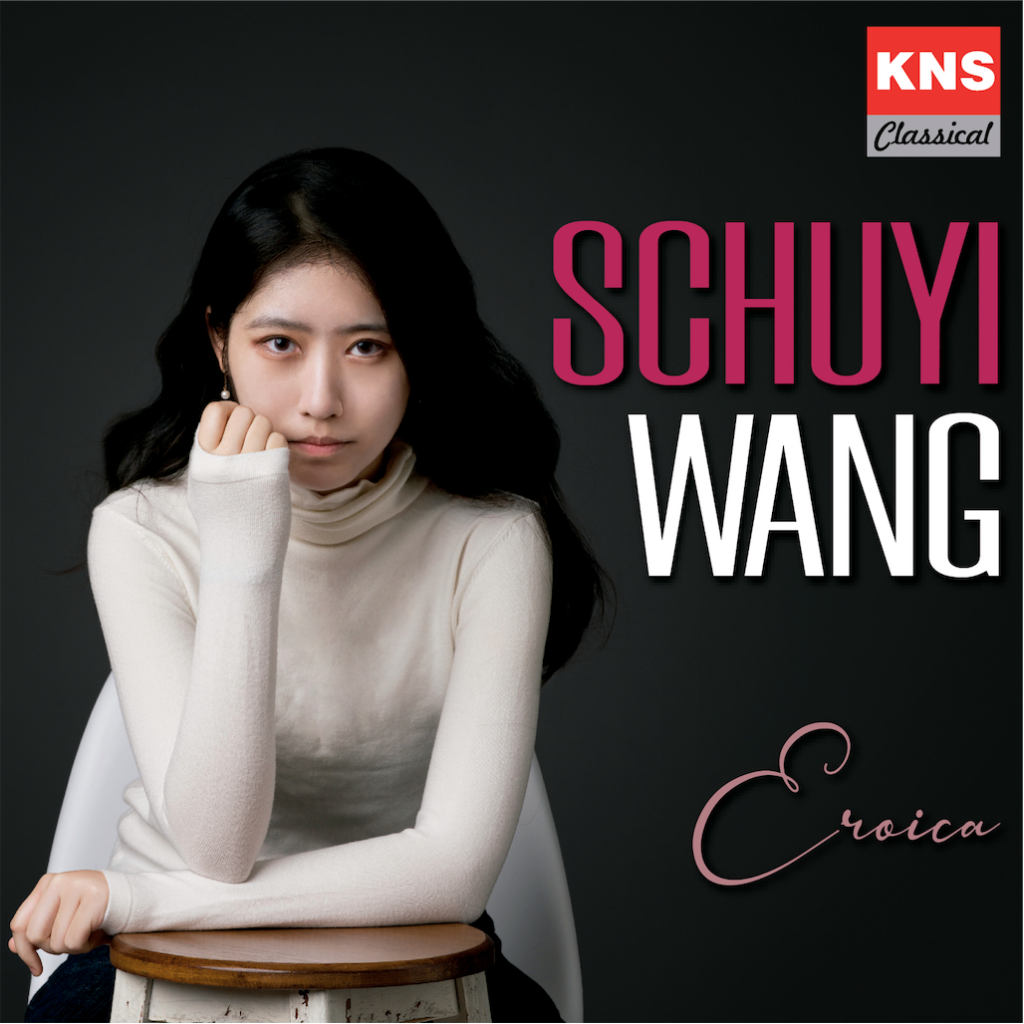
Strength and Imagination – Eroica by Schuyi Wang
There are recital programs that assemble celebrated repertoire, and there are others that quietly reveal the artistic personality behind the performer. Schuyi Wang’s Eroica belongs unmistakably to the latter category. Built around works that explore the idea of heroism in different stylistic languages, the album presents not only a demanding technical itinerary but also a persuasive statement of interpretative maturity from a pianist still at the beginning of an international trajectory.
Chopin’s Polonaise in A-flat major, Op. 53 is often treated as a vehicle for brilliance, yet Wang approaches it from a different perspective. Rather than emphasizing sheer weight, she highlights its rhythmic vitality and noble breadth, allowing the music’s ceremonial character to speak with clarity. The central section unfolds with lyrical warmth and a finely controlled singing tone, suggesting an instinctive understanding of Chopin’s balance between grandeur and intimacy. Her performance feels grounded and purposeful, shaped by an ear for proportion rather than spectacle.
The transition into Liszt’s Réminiscences de Norma opens a wider expressive horizon. Here Wang demonstrates a notable sense of pacing across a work whose shifting episodes can easily lose coherence. She treats Bellini’s themes not as decorative material but as dramatic protagonists within a continuously evolving narrative. Passagework remains transparent even at moments of heightened virtuosity, and the climaxes arrive with a sense of inevitability that reflects careful structural planning.
Liszt’s Vallée d’Obermann becomes the emotional fulcrum of the program. Wang allows the music’s introspective opening to breathe naturally, resisting any temptation toward premature intensity. As the work progresses, she gradually expands the expressive space, building tension through color rather than force. The final transformation of the material emerges with quiet conviction, revealing a performer attentive to the philosophical dimension of Liszt’s writing as much as to its technical demands.
The recital concludes with Beethoven’s Variations and Fugue in E-flat major, Op. 35, a work whose inventive spirit makes it one of the composer’s most forward-looking creations. Wang approaches the variations with alertness and clarity, differentiating their characters while preserving a strong sense of continuity across the cycle. The fugue, articulated with firmness and transparency, provides a decisive conclusion that reinforces the program’s thematic thread of transformation and renewal.
Across the entire recording, what proves most striking is the naturalness of Wang’s musical communication. Her playing combines energy with sensitivity, and she demonstrates a particular gift for shaping long musical spans without sacrificing detail. The impression is not of a performer seeking effect, but of an artist intent on revealing the inner logic of the works she plays.
In Eroica, Schuyi Wang offers more than an impressive recital of major repertoire. She presents a coherent artistic vision and a confident musical voice that invites attention well beyond the promise of youth. The recording stands as a compelling introduction to a pianist whose interpretative instincts already suggest considerable depth and individuality.